
CERTIFIED COURSES
URBAN RENAISSANCE TECH PROGRAM FOR URBAN MANAGERS
About the Course
The Urban Renaissance Tech Programme (URTP) is a credit-based certification initiative by the Ministry of Housing and Urban Affairs (MoHUA), Government of India. It strengthens the skills of urban managers through structured learning, including modules, hands-on activities, assessments, and a capstone project. Participants earn credits throughout the programme, and completing the required credits leads to certification.

| Dates | Duration | Mode | No of Participants |
|---|---|---|---|
| Slot 1: 22nd – 23rd August, 2025 | 02 Days, (Total: 16 Hours) | On-Campus | 44 |
| Slot 2: 25th – 26th August, 2025 | 02 Days, (Total: 16 Hours) | On-Campus | 7 |
Specialized Elective Course
| Dates | Duration | Mode | No of Participants |
|---|---|---|---|
| September 2025 - November 2025 | 24 Hours | Online | 73 |
The online classes will be conducted in the evening hours, scheduled after your official working hours to ensure convenience.
Programme Structure
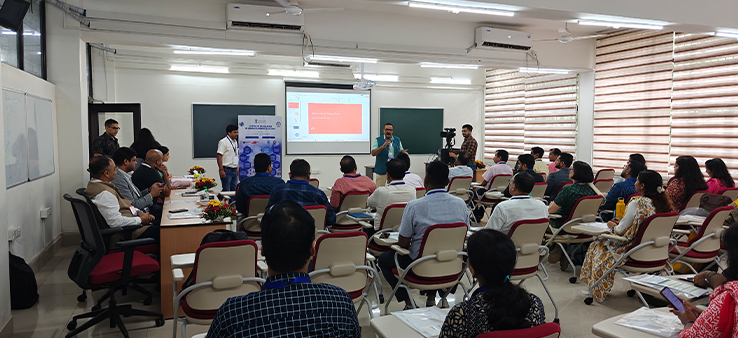
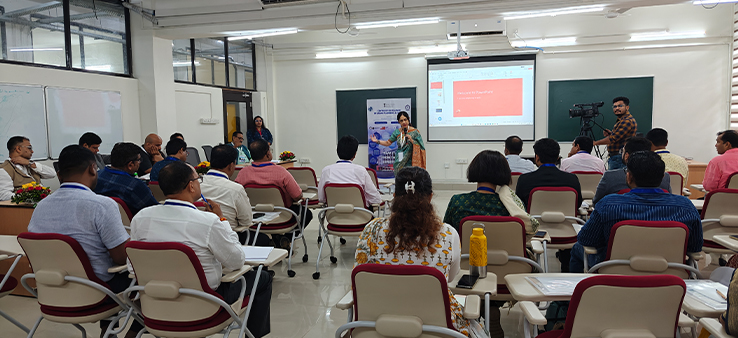
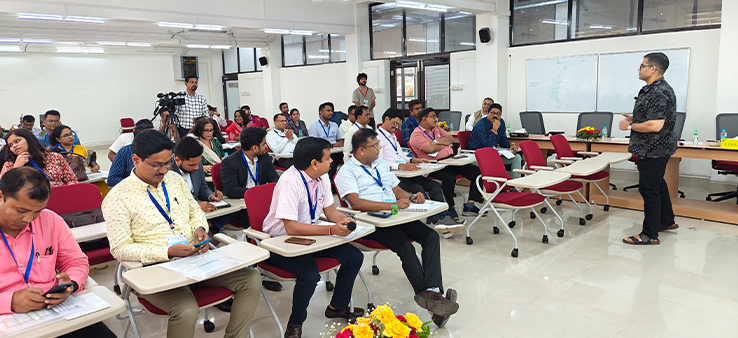
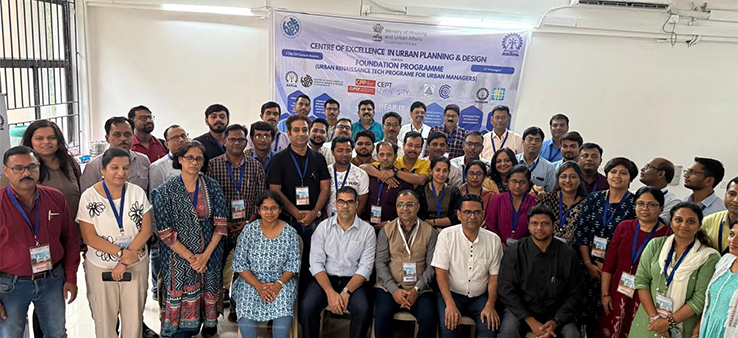
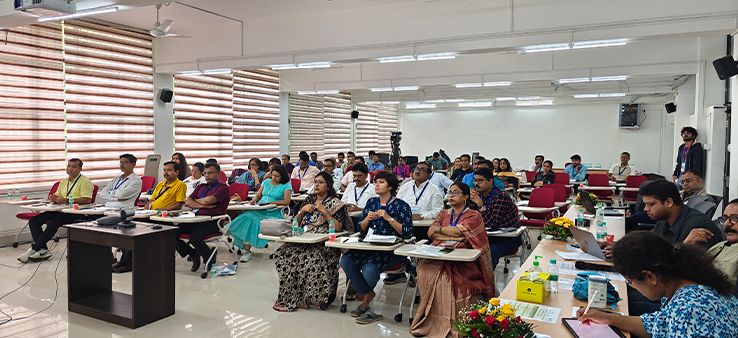
As part of the On-campus Foundation Programme, the Experienced Faculty Members and Professionals of IIT Kharagpur Covered 4 (Four) Major Topics.
-
"Urbanization in India – Trends and Contemporary Issues and Challenges"- By Prof. Dr. Tarak Nath Mazumder & Asso. Prof. Dr. Arup Das from the Dept. of Architecture and Regional Planning, IIT Kharagpur
-
"Urban Mobility and Integrating Public Transportation with Land Use Planning"- By Prof. Dr. Debapratim Pandit & Asst. Prof. Dr. Shreyas Pramod Bharule from the Dept. of Architecture and Regional Planning, IIT Kharagpur
-
"Urban Renewal and Brownfield Re-development – Monetization of Land and Assets"- By Emeritus Prof. Dr. Subrata Chattopadhyay & Prof. Dr. Haimanti Banerji from the Dept. of Architecture and Regional Planning, IIT Kharagpur
-
"Current Evolution in Urban Planning – Applications of AI and Digital Twin"- By Emeritus Prof. Dr. Subrata Chattopadhyay, Dept. of Architecture and Regional Planning, IIT Kharagpur & Asst. Prof. Dr. Shreya Banerjee, IIT Jodhpur
Following the Foundation Course, a 24-hour Elective Course on “Revitalization of Cities and Urban Planning” is currently being conducted under the same programme. IIT Kharagpur is delivering this elective, offering in-depth modules on the following key topics:
-
"Development Management in Urban Planning"- By Asso. Prof. Dr. Sumana Gupta, Dept. of Architecture and Regional Planning, IIT Kharagpur
-
"Planning Legislation with focus on Master Planning and Land Use Planning"- By Asso. Prof. Dr. Arup Das, Dept. of Architecture and Regional Planning, IIT Kharagpur
-
"GIS and Digital Planning Tool"- By Asso. Prof. Dr. Saikat Kumar Paul, Dept. of Architecture and Regional Planning, IIT Kharagpur
-
"Transportation Planning and TOD"- By Prof. Dr. Debapratim Pandit & Asst. Prof. Dr. Shreyas Pramod Bharule from the Dept. of Architecture and Regional Planning, IIT Kharagpur
Course Outcomes
- Bridge the gap between technology and management in urban development.
- Plan and implement sustainable and innovative city projects.
- Strengthen the Urban Ecosystem through data-driven and inclusive approaches.
- Lead urban initiatives across government, industry, and community sectors.
CERTIFIED COURSES
URBAN RENAISSANCE TECH PROGRAM FOR URBAN MANAGERS
About the Course
The Urban Renaissance Tech Programme (URTP) is a credit-based certification initiative by the Ministry of Housing and Urban Affairs (MoHUA), Government of India. It strengthens the skills of urban managers through structured learning, including modules, hands-on activities, assessments, and a capstone project. Participants earn credits throughout the programme, and completing the required credits leads to certification
| Dates | Duration | Mode |
|---|---|---|
| Slot 1: 15 th - 17 thMay, 2026 | Total 16 Hours | Online |
| Slot 2: 07 th - 09 th August, 2026 | Total 16 Hours | Online |
| Dates | Duration | Mode | Venue |
|---|---|---|---|
| August - October, 2026 | 24 Hours | In person | Kolkata, West Bengal |
Programme Structure
Specialized Elective Course Modules:
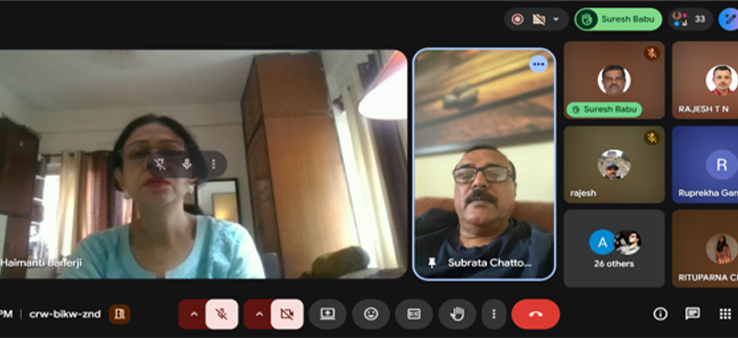
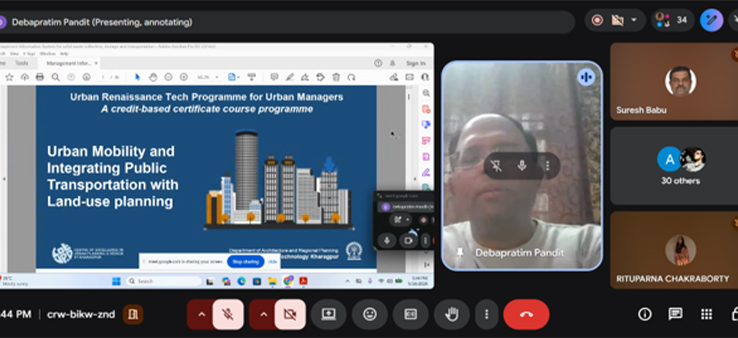
IIT Kharagpur will be offering courses on the following topics:
- Development Management in Urban Planning
- GIS & Digital Planning Tools
Course Outcomes
- Bridge the gap between technology and management in urban development.
- Plan and implement sustainable and innovative city projects.
- Strengthen the Urban Ecosystem through data-driven and inclusive approaches.
- Lead urban initiatives across government, industry, and community sectors.
TRAINING PROGRAMS
GREEN BUILDING IN THE RESIDENTIAL SECTORS
About the Training Program
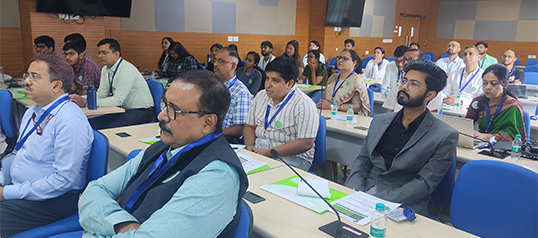
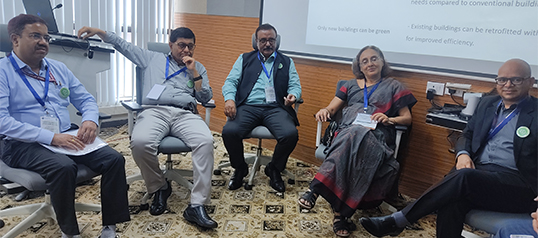
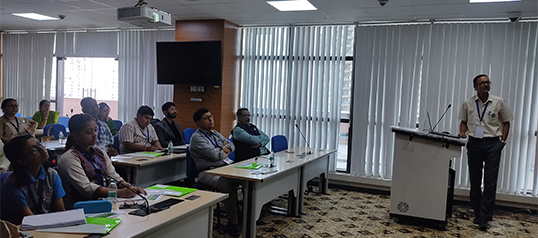
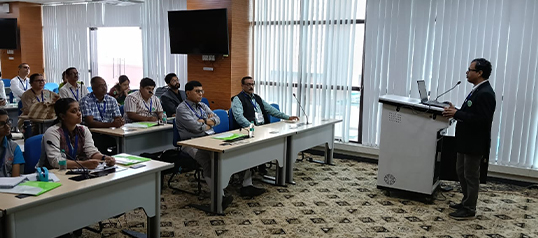
The awareness workshop on Green Buildings in the Residential Sectors aimed to deepen understanding of sustainable construction practices, energy-efficient housing, and green building techniques. Experts discussed critical aspects of green buildings, including global trends, India's future directions, and government initiatives designed to promote sustainable architecture.
Programme Structure
-
“Importance of Green Buildings in achieving India’s Net Zero Target”- By Prof. Dr. Subrata Chattopadhyay, Dept. of Architecture and Regional Planning
-
“Importance of adopting Green Building Strategies”- By Asso. Prof. Dr. Shankha Pratim Bhattacharya, Dept. of Architecture and Regional Planning
-
“Sustainable Cooling Strategies for Residential Buildings”-By Asst. Prof. Dr. Prashant Anand, Dept. of Architecture and Regional Planning
-
“The concept of a Certified Green building and India’s National Rating System”-By Dr. Himadri Guha, the Proprietor of S. S. Solutions, Kolkata
-
Panel Discussion - “Are Green Buildings just a Trend or a Necessity"-By Ms. Shakuntala Ghosh, Principal Architect and Partner at Ghosh, Bose and Associates;
Dr. Himadri Guha, the Proprietor of S. S. Solutions, Kolkata
Mr. Debesh Chakraborty, Regional Chief of HUDCO (Kolkata);
Mr. Durga Prasad Konar, Chief Engineer of CPWD (Kolkata);
Mr. Rajneesh Kumar and Mr. Sanjay Kumar, Deputy General Managers at the State Bank of India, Kolkata; and
Prof. Subrata Chattopadhyay, Dept. of Architecture and Regional Planning, IIT Kharagpur
-
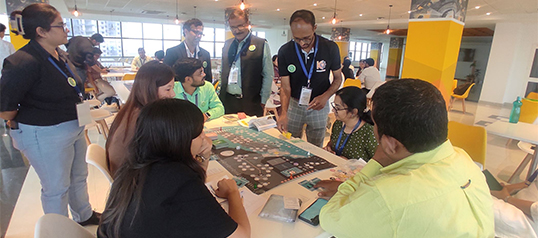
Game based Learning for Green Building Education
- Master of Disaster (MoD), a fast-paced board game developed by ASSIST Asia
- Energetic, a cooperative game from City Atlas (USA)
- City Runner, a game developed by KUDOS Lab at FLAME University and the eGov Foundation
- BiBo, developed by KUDOS Lab at FLAME University
- - by Dr. Balaji Kalluri, an Assistant Professor from FLAME University, Pune
Who has attended?
- Small and Medium Scale Constructors & Developers
- Bankers
- Architects
- Engineers
- Urban Researchers
- Urban Planners
- School Children
- Government Officials
Course Outcomes
- Participants gained in-depth knowledge of green building principles, including sustainable construction practices, energy-efficient housing, and the importance of green building certifications such as GRIHA, LEED, and IGBC.
- The workshop enhanced practical understanding through keynote presentations and interactive panel discussions on global trends, government initiatives, and financial incentives promoting green buildings, empowering attendees to integrate sustainability into residential building projects.
- Engaging games and hands-on activities provided experiential learning on urban sustainability, climate resilience, and community leadership, helping participants internalize complex urban planning challenges and sustainable solutions.
“Today, I pledge to embrace the power of Green Buildings in our journey towards a Net Zero Future.
By choosing eco – friendly construction, reducing carbon footprints, conserving resources, and adopting principles of sustainable lifestyle, our goal is to craft environments that support life while ensuring the protection of our planet for the generations that follow.
Together, we take the pledge to build a greener, cleaner and more sustainable India, and play our role which would bring us one step closer to a Net Zero World.
Let’s design today for a sustainable tomorrow!”
TRAINING PROGRAMS
Contemporary Planning Tools and Techniques – Sessions I & II
About the Training Program
In collaboration with the Government of Bihar
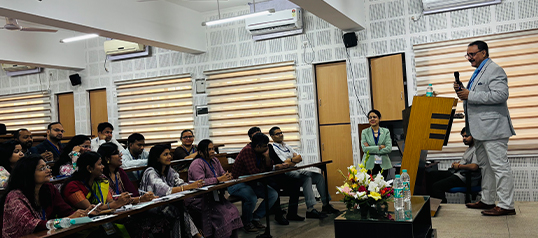
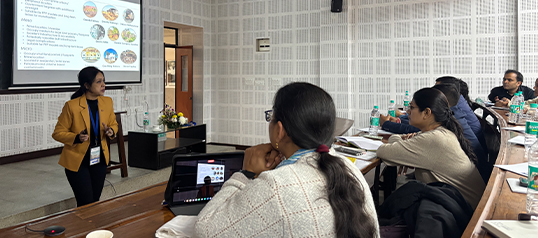
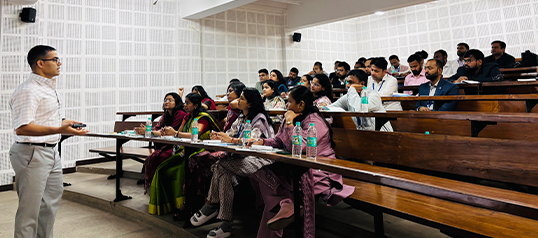
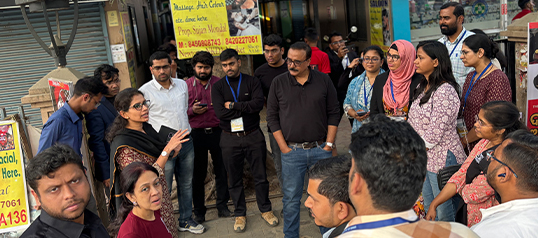
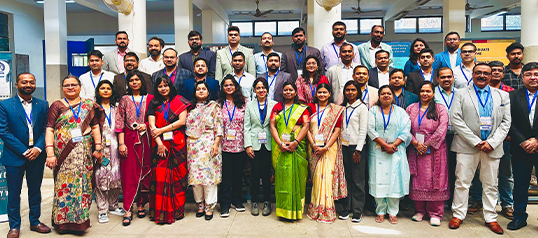
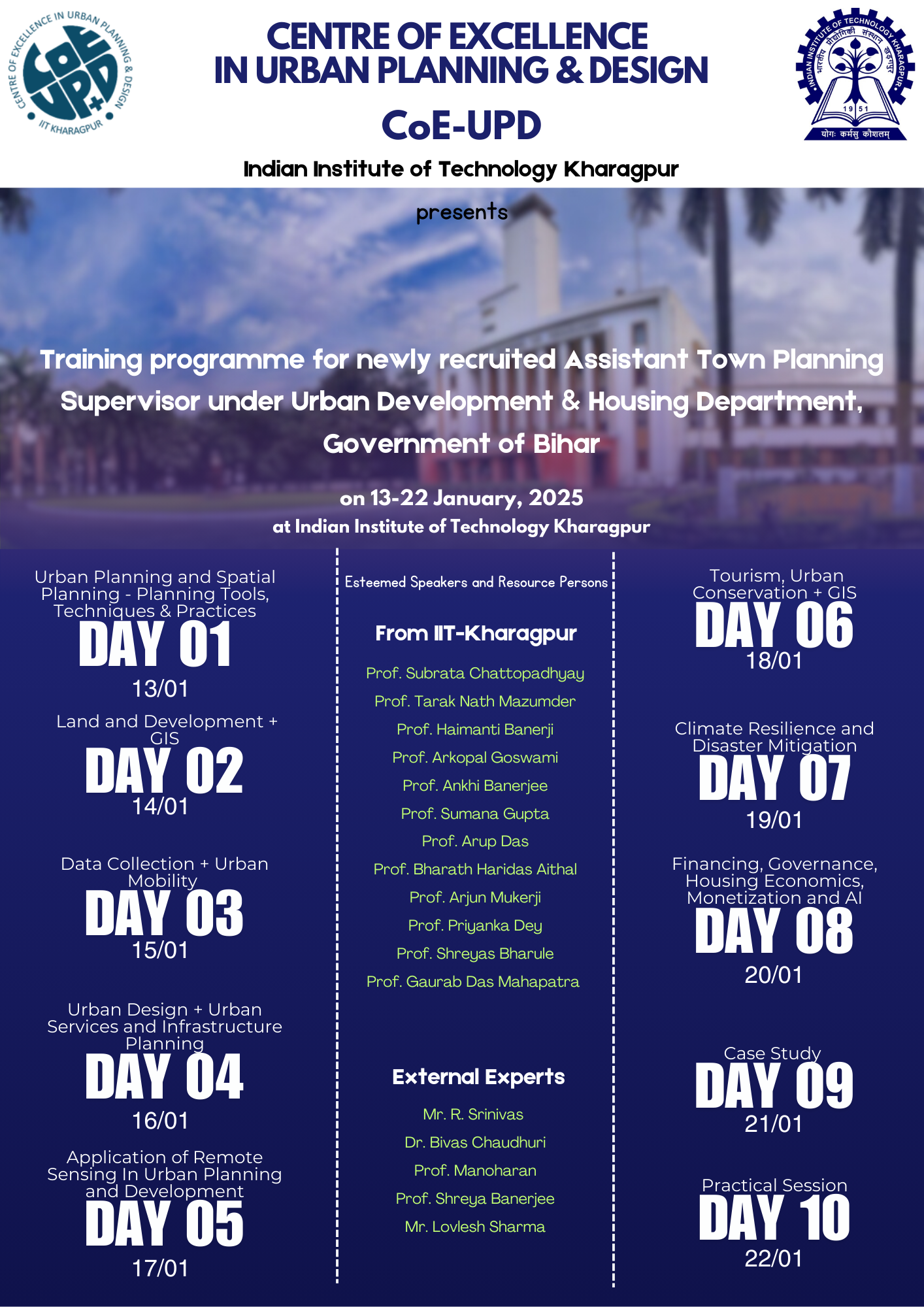
The Centre of Excellence in Urban Planning and Design (CoE-UPD), IIT Kharagpur, in collaboration with the Government of Bihar, conducted an intensive capacity-building programme on Contemporary Planning Tools and Techniques for newly recruited Assistant Town Planning Supervisors of the Urban Development & Housing Department (UDHD), Government of Bihar. The programme aimed to strengthen their planning skills and introduce modern, data-driven approaches for solving urban challenges. Through expert sessions, hands-on demonstrations, and interactive discussions, participants gained a clear understanding of integrated urban development, spatial planning, and the latest planning tools, trends, and policies essential for effective city management.
Programme Structure
Module 1: Urban Planning and Spatial Planning ‐ Planning Tools, Techniques & Practices
- Urban Planning Policy and Practice ‐ task and responsibilities, challenges, traditional methodology vs contemporary techniques ‐ Innovations required in overall approach
- Peri‐urbanization and Urban Sprawl ‐ understanding of Carrying Capacities, Real‐estate dynamics
- Incentive Mechanism for development of Township/ Town Planning Scheme ‐ Global and National Best Practices ‐ Global and National Best Practices - Local Area Planning
Module 2: Land and Development
- National good practices on successful models of TOD
- Land ‐ Pooling and Development Mechanism Land amalgamation, reorganization, reconstitution, and consolidation ‐ green field and Retrofitting ‐ FSI, Optimization, TDR
Module 3: Data Collection
- Techniques of Data Collection, Sampling techniques, Survey methodology, Analyses, SPSS Software
- Quantitative Methods of Planning
Module 4: Urban Mobility
- Urban Mobility and Public Transportation ‐ Global and National Innovations
- Sustainable Urban Mobility ‐ way forward
Module 5: Urban Design
- River Sensitive Urban Planning ‐ Global and National good practices
- Form Based Code
Module 6: Urban Services and Infrastructure Planning
- Sustainable Urban Infrastructure ‐ Water Supply, Sewerage, Drainage, Rain water Harvesting, Solid waste & Sanitation
Module 7: Application of Remote Sensing in Urban Planning and Development
- Pixel based analysis (Building Footprints), land use classification, urban expansion, infrastructure planning, building analysis, green space preservation, and smart city development
Module 8: GIS
- Introduction to GIS and Remote Sensing
- Hands‐on application of GIS
- GIS ‐ based application ‐ Augmentation of Urban infrastructure in core city
- GIS ‐ based application ‐ Analyses of tempo‐spatial growth pattern of urban areas
- SOP - GIS Based Master Plan & GIS base Mapping & Property Survey
Module 9: Tourism, Urban Conservation
- Sustainable Tourism strategies ‐ a Carrying Capacity based approach
- Integrated Urban Conservation ‐ status and provisions ‐ integrating with planning norms
Module 10: Climate Resilience and Disaster Mitigation
- Climate Adaption, Mitigation and Resilience ‐ Statutory provisions, guidelines and practices
- Low Carbon Pathways and Nature‐based solution
- Disaster Resilient Urban Infrastructure ‐ Global and National good practices
Module 11: Financing, Governance, Housing Economics, Monetization and AI
- Urban Governance, People's participation ‐ Its impact on Planning/Policy Formulation
- Value Capture Financing
- Housing‐ Supply, demand, gap analysis planning
- Artificial Intelligence applications on Urban Planning
- Urban Re‐development and Retrofitting ‐ Asset Monetization and Brownfield Development
Course Outcomes
- The training equipped the newly recruited Assistant Town Planning Supervisors with advanced practical skills in modern urban planning, GIS, spatial analysis, and field-based learning, strengthening their ability to tackle Bihar’s urbanization challenges efficiently.
- Participants gained a robust understanding of integrated urban development, sustainable mobility, climate resilience, and planning innovations.
- Collaborative and interactive sessions, supported by expert-led lectures, case studies, hands-on exercises on GIS, and peer engagement, significantly enhanced participants’ capacity to implement innovative urban planning strategies and adapt to emerging trends in contemporary city building.
TRAINING PROGRAMS
Water Pollution and Waste Water Management for Per-Urban Areas – Sessions I & II
About the Training Program
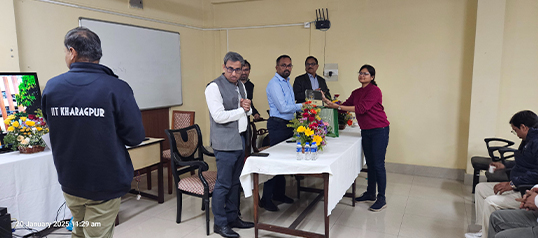
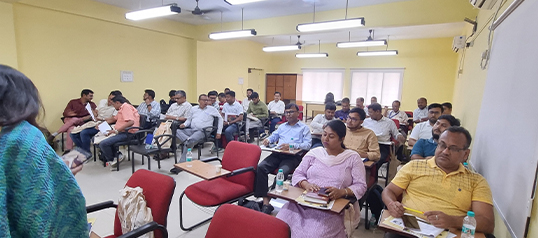
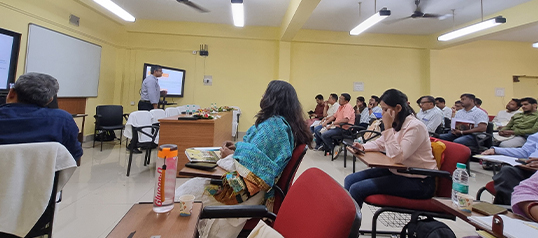
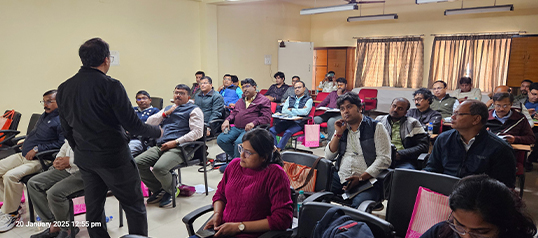
In collaboration with the Department of Panchayati Raj and Rural Development, Govt. of West BengalThe Centre of Excellence in Urban Planning and Design (CoEUPD), IIT Kharagpur, conducted a capacity-building programme on Insights on Water Pollution and Wastewater Management for Peri-Urban Areas, with emphasis on both design and field perspectives. Held in collaboration with the Department of Panchayati Raj and Rural Development, Government of West Bengal, the programme aimed to strengthen the skills of nodal agencies working in peri-urban regions, especially in the urban hinterland where such infrastructure is located. Combining key theoretical concepts with practical insights, the training enhanced participants’ technical readiness for effective and sustainable water resource management in peri-urban settings.
Who has attended?
- Participants were the government officials from eight districts across West Bengal
- Alipurduar
- Jhargram
- Nadia, Birbhum, Malda
- Uttar Dinajpur, Dakshin Dinajpur and Coach Behar.
Programme Structure
-
"Environmental Regulations in India and Its Implementation"- By Dr. Tapas Kumar Gupta, Former Chief Engineer & Chief Technical Advisor, West Bengal Pollution Control Board
-
"Field-specific advanced technologies for Faecal Sludge Treatment"- By Asst. Prof. Dr. Partha Sarathi Ghosal, School of Water Resources, IIT Kharagpur
-
"Various Aspects in Structural Design and Construction"- By Prof. Dr. Amit Shaw, Dept. of Civil Engineering, IIT Khragpur
-
"Solid and Liquid Waste Management in Rural India"- By Asso. Prod. Dr. Arup Das, Dept. of Architecture and Regional Planning, IIT Kharagpur
-
"Advanced Technologies for Gray Water Management"- By Asst. Prof. Dr. Partha Sarathi Ghosal, School of Water Resources, IIT Kharagpur
Course Outcomes
- The workshop successfully deepened participants’ understanding of water pollution, wastewater management, and faecal sludge treatment technologies, enabling them to apply sustainable solutions in peri-urban governance and planning.
TRAINING PROGRAMS
Precinct Level Accessibility Audit using Spatial Audit Checklist and Simulation Based Techniques - Woxsen University, Hyderabad
About the Training Program
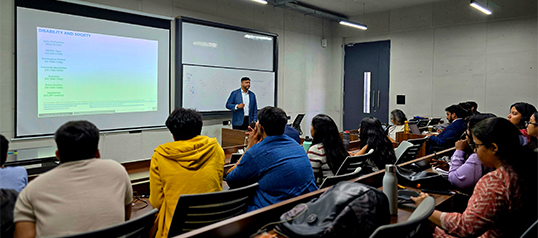
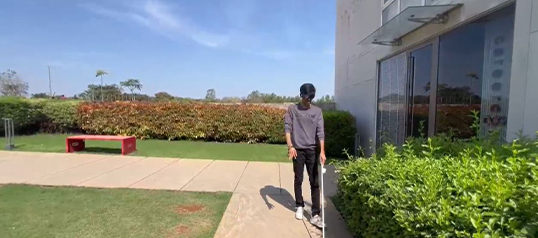
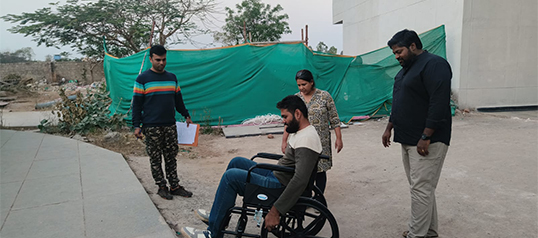
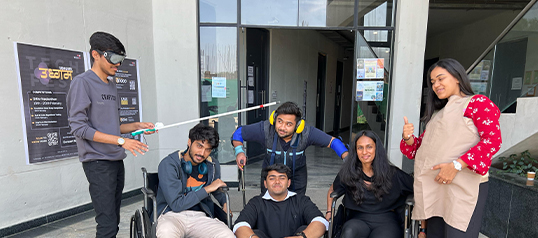
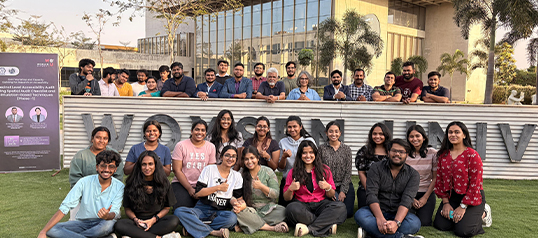
In collaboration with the Woxsen University, HyderabadA two-day joint workshop titled Precinct Level Accessibility Audit using Spatial Audit Checklist and Simulation-based Techniques was conducted at Woxsen University, Hyderabad. Organized by the Centre of Excellence in Urban Planning and Design (CoEUPD), IIT Kharagpur, in collaboration with the School of Architecture and Planning, Woxsen University, the programme aimed to build awareness on universal design and accessibility in public spaces. The workshop emphasized that universal design is centred on real people and their everyday needs. It highlighted how thoughtful planning—such as barrier-free pathways, handrails, clear signage and accessible circulation—can significantly enhance inclusivity in urban environments.
In collaboration with the Woxsen University, Hyderabad and IIT (BHU) Varanasi
Programme Structure
- Introduction to Universal Design and Inclusive Cities
- Experimental Understanding of Universal Design
- Inclusive Pedestrian Areas and Public Zones
- Hands-on exercise on Universal Design Audit at precinct level
Who has attended?
- Training of Trainers (ToT)
- Faculty Members
- Students
Course Outcomes
- The program effectively enhanced participants’ understanding of accessibility and inclusivity in the built environment through hands-on learning and simulation-based exercises.
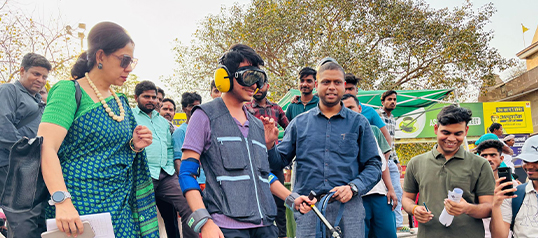
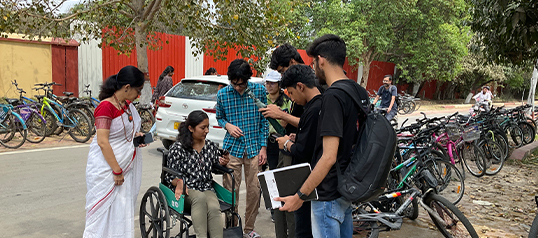
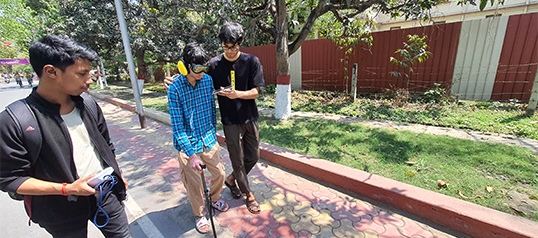
- The simulation exercises using maternity suits, smart canes, wheelchairs, and geriatric kits gave participants a real-world experience of physical and psychological challenges faced by different user groups.
- The programme strengthened participants’ capacity to apply universal design principles and use spatial audit tools for inclusive precinct planning.
Precinct Level Accessibility Audit using Spatial Audit Checklist and Simulation Based Techniques - IIT (BHU) Varanasi, Uttar Pradesh
About the Training Program
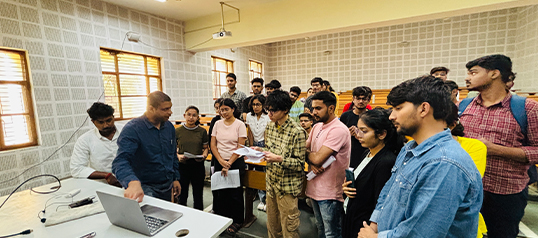
In collaboration with the IIT (BHU) Varanasi, Uttar PradeshA three-day joint workshop titled Precinct Level Accessibility Audit using Spatial Audit Checklist and Simulation-Based Techniques was held at IIT (BHU) Varanasi. Organized by the Centre of Excellence in Urban Planning and Design (CoEUPD), IIT Kharagpur in collaboration with IIT (BHU), the programme focused on strengthening awareness and skills related to universal design and accessibility in public spaces. The workshop highlighted the importance of universal design in everyday environments and encouraged participants to rethink public spaces from the perspective of vulnerable groups.
Programme Structure
- Introduction to Universal Design and Inclusive Cities
- Experimental Understanding of Universal Design
- Inclusive Pedestrian Areas and Public Zones
- Hands-on exercise on Universal Design Audit at precinct level
Who has attended?
- Training of Trainers (ToT)
- Faculty Members
- Students
Course Outcomes
- The program effectively enhanced participants’ understanding of accessibility and inclusivity in the built environment through hands-on learning and simulation-based exercises.
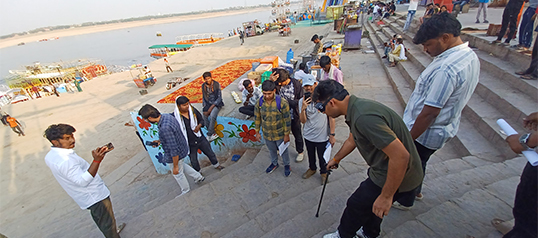
- At Assi Ghat, Varanasi, participants conducted an extensive field-based accessibility audit, identifying key challenges such as inadequate signage, absence of ramps and tactile paving, inaccessibility of toilets, encroachment, and poor pedestrian facilities.
- The simulation exercises using maternity suits, smart canes, wheelchairs, and geriatric kits gave participants a real-world experience of physical and psychological challenges faced by different user groups.
- Based on their field observations, participants proposed design interventions, including the installation of Braille and tactile signages, proper ramps, resting amenities, improved pathways, accessible parking, and disaster response measures in line with Harmonized Accessibility Guidelines, 2021.
- The programme strengthened participants’ capacity to apply universal design principles and use spatial audit tools for inclusive precinct planning.
TRAINING PROGRAMS
Awareness on Fire Safety in Urban Built Environment – Sessions I & II
About the Training Program
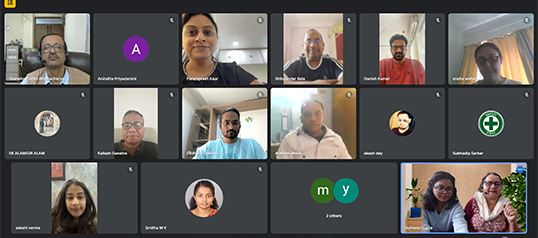
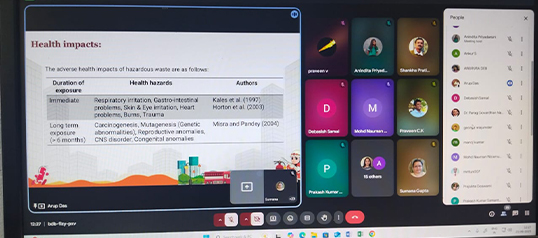
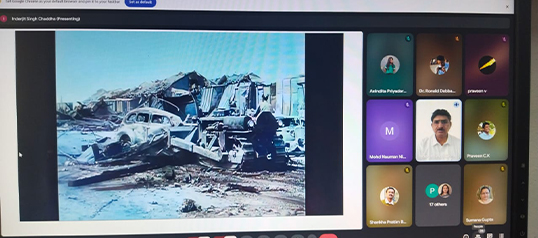
The training programme Awareness on Fire Safety in Urban Built Environment provided an overview of fire safety measures for different types of buildings, including residential complexes, hotels, hospitals, and industries located within dense and congested urban areas. It also addressed structural safety requirements aimed at preventing building collapse. The programme included site visits and active demonstrations to give participants practical exposure and a clearer understanding of fire safety practices.
Programme Structure
-
"Introduction to the subject: Fire Safety in Urban Environment"- By Asso. Prof. Dr. Sumana Gupta, Dept. of Architecture and Regional Planning, IIT Kharagpur
-
"Achieving Fire Safety following Codes and Guidelines"- By Asso. Prof. Dr. Shankha Pratim Bhattacharya, Dept. of Architecture and Regional Planning, IIT Kharagpur
-
"Fire, smoke and egress planning Hospitals, Highrises, Auditoriums, underground metro stations, Airports"- By Asso. Prof. Dr. Sumana Gupta, Dept. of Architecture and Regional Planning, IIT Kharagpur
-
"Fire and Behaviour of Structural Elements (Steel & Concrete)"- By Prof. Dr. Argha Deb, Dept. of Civil Engineering, IIT Kharagpur
-
"Forest Fire & Regulatory framework for Building Plan Sanction"- By Dr. Ronald Debbarma, Senior Consultant, National Disaster Management Authority
-
"Researches in Façade Fire in Urban areas"- By Dr. Dravesh Yadav, Senior Researcher and Lab Operations Manager, Fire Engineering Research Laboratory, IIT Gandhinagar
-
"Fire and Regulatory Framework for Building Plan Sanction"- By Ar. Subir Basu, Kolkata
-
"Sharing of real-life experiences of fire incidents through case studies"- By Mr. Indrajit Chadha, Chief Fire Officer, Mumbai Port Authority
-
"Need for Fire Safety Audit of Existing Building"- By Asso. Prof. Dr. Sumana Gupta, Dept. of Architecture and Regional Planning, IIT Kharagpur
-
"Fire and Hazardous Material Movement in Urban Areas"- By Asso. Prof. Dr. Arup Das, Dept. of Architecture and Regional Planning, IIT Kharagpur
-
"Video Demonstrations using various Fire Extinguishing Equipment"- By Mr. Akhil Kar, Technical Expert, Fire & Safety Engineering Institute, Haldia
Who has attended?
- Town Planners
- Architects
- Government Officials
Course Outcomes
- Participants acquired comprehensive knowledge of fire safety principles specific to urban environments, including fire and smoke planning for critical infrastructures such as hospitals and airports, as well as an understanding of fire behavior in structural elements and regulatory frameworks.
- The programme enhanced practical skills through demonstrations of firefighting equipment and emphasized the importance of fire safety audits in existing buildings, while also addressing the management of hazardous material movement in urban areas.
- Engaging discussions based on real fire incidents helped foster practical insights and community awareness, and the inclusion of an online quiz effectively evaluated the participants' learning outcomes.
TRAINING PROGRAMS
Low-Cost Bamboo Housing Solutions for Peri-Urban Areas
About the Training Program
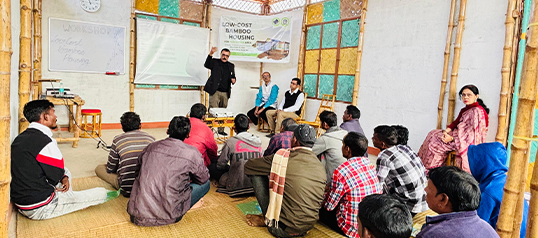
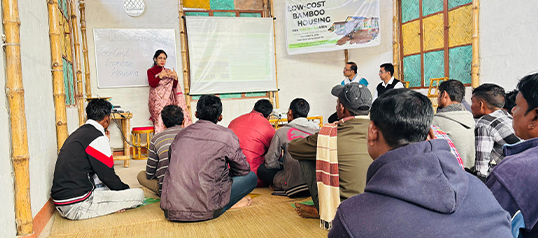
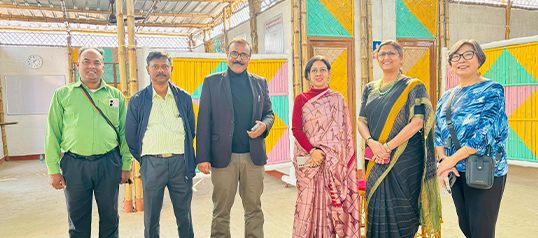
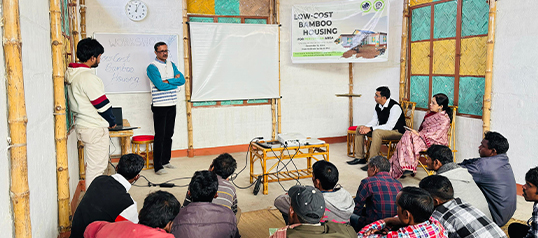
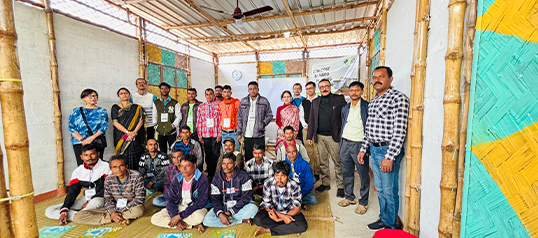
A one-day Capacity Building Programme on Low-Cost Bamboo Housing was organized for residents of Kharagpur’s peri-urban areas to raise awareness about an affordable and eco-friendly housing solution pioneered by IIT Kharagpur. The initiative aimed to demonstrate how bamboo, mud, and other vernacular materials can be used to build sustainable homes for communities lacking proper housing. The programme included live demonstrations and hands-on sessions, giving participants practical insight into bamboo construction techniques.
Programme Structure
- Introduction to the Ministry of Housing and Urban Affairs (MoHUA) mission and innovative construction technologies initiatives through the Global Housing Technology Challenge-India (GHTC-I), aligned with PMAY-U goals
- Informative presentation on bamboo-intensive construction projects worldwide, focusing on examples from Malaysia, Vietnam, Indonesia, and Mexico
- Practical training session on bamboo selection, splitting techniques, and proper treatments to enhance durability
- Techniques for constructing bamboo-reinforced foundations and plinths
- Methods for building bamboo wall panels and columns, ensuring structural integrity
- Installation procedures for bamboo roof trusses and roof coverings
- Interactive discussion on achieving cost-effective construction and promoting sustainability with bamboo technologies
Who has attended?
- Local construction sector workers from five densely populated settlements in Kharagpur
- Paljhari
- Kumardubi
- Telighana Sakpara Tangasol
Course Outcomes
- The programme raised awareness among the local construction sector workers of peri-urban areas about bamboo as an eco-friendly, affordable housing material and equipped participants with practical skills in bamboo construction techniques such as selection, splitting, treatment, and structural use.
- It strengthened community confidence in bamboo housing by providing scientific knowledge that overcame skepticism and empowered residents to actively engage in sustainable housing initiatives.
- The sessions empowered the community to adopt cost-effective, eco-friendly housing solutions, promoting self-reliance and long-term sustainability in peri-urban areas.
TRAINING PROGRAMS
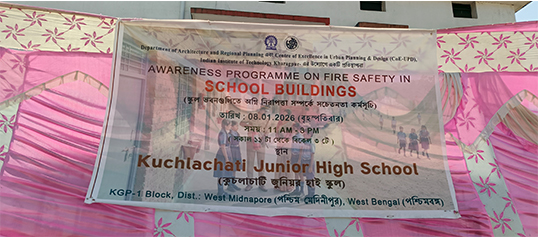
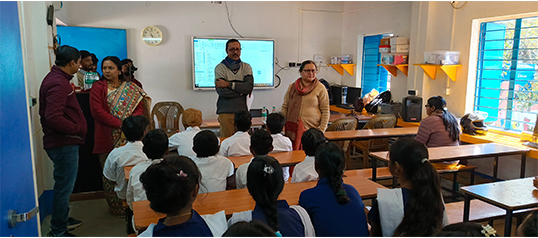
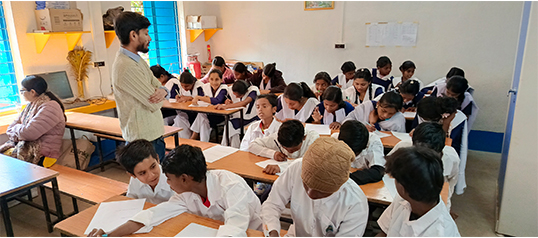
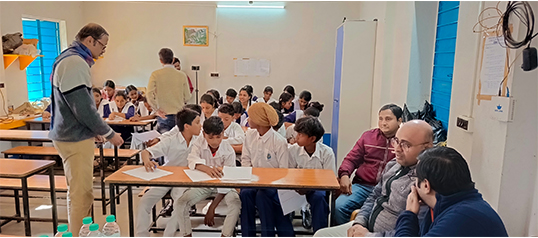
Awareness Programme on Fire Safety in School Building
About the Training Program
This training will provide an overview of fire safety for
different types of built urban areas and occupancies, from
multilevel facilities like school, college and hospitals to
industrial areas. Structural safety to prevent collapse will
also be addressed.
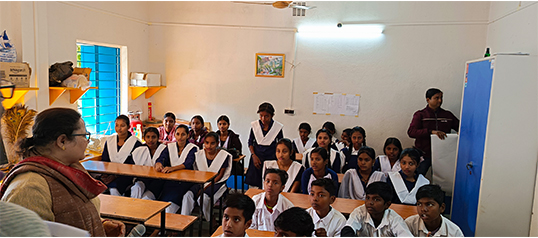
A Fire Safety Awareness Programme in schools is essential to
educate students and staff on preventing, detecting, and
responding to fire emergencies. Key components include
conducting regular, structured mock drills, demonstrating the
P-A-S-S method for extinguisher use, identifying hazards, and
establishing clear evacuation routes. Such initiatives reduce
panic, train responsible behavior, and ensure preparedness,
often including training on emergency calls and low-smoke
crawling.
| Dates | Duration | Mode | No of Participants |
|---|---|---|---|
| 8thJanuary, 2026 | 01 Day | Offline | 41 |
Taught By
- Dr. Sumana Gupta, Professor, Dept. of Architecture and Regional Planning & a Member, Centre of Excellence in Urban Planning and Design (CoE-UPD), IIT Kharagpur
- Dr. Shankha Pratim Bhattacharya, Associate Professor, Dept. of Architecture and Regional Planning & a Member, Centre of Excellence in Urban Planning and Design (CoE-UPD), IIT Kharagpur
Who has attended?
- Govt. Officials
- Students
Course Outcomes
- Understand how buildings are designed to keep you safe, including which materials help stop a fire from spreading and what keeps a building from collapsing.
- Get hands-on knowledge on how to use a fire extinguisher using the P-A-S-S method and learn the right way to call for help during an emergency.
- Learn how to follow a clear evacuation plan, use "wayfinding" signs to find the nearest exit, and practice the best ways to move through smoke safely (like crawling low).
- Learn how to organize practice drills and teach people—especially in schools or hospitals—how to stay calm, react quickly to alarms, and avoid panic.
- Identify the specific fire safety needs for different locations, whether you are working in a tall hotel, a busy hospital, or a large factory.
TRAINING PROGRAMS
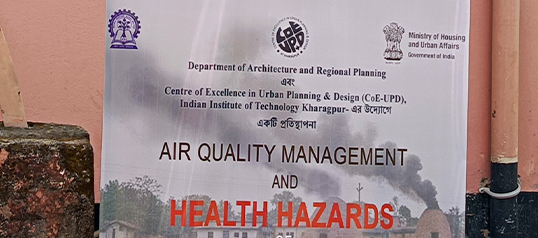
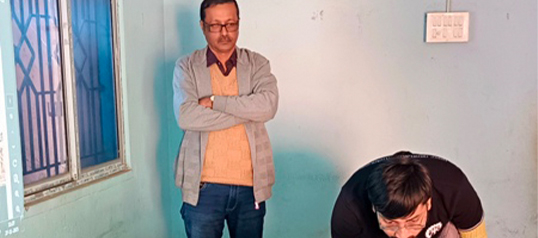
Air quality management and health hazards of Terracotta craft villages
About the Training Program
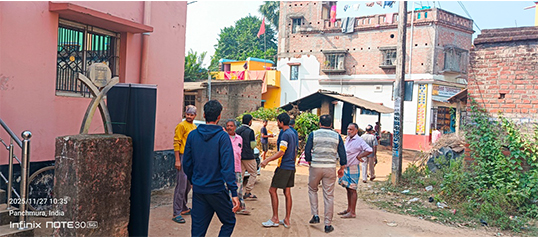
Bankura’s terracotta is an internationally appreciated art
form. Panchmura village in Bankura is the home of around 270
artists making Terracotta items. The place is famous for long
necked Terracotta horses. Terracotta means baked clay. The
craftspeople colour their products with clay itself and fire
them in kilns with the help of dry Eucalyptus leaves. The
terracotta of Bankura is famous for its simple yet dynamic
artistry having a range of products starting from animal and
human statues to household utility and décor products.
However, the entire process of making the terracotta products
causes significant health hazards to the craftsmen and
pollutes the environment.
The project will create awareness on these issues through
air-quality monitoring, measurement and mitigation strategies.
| Dates | Duration | Mode | No of Participants |
|---|---|---|---|
| 27th November, 2025 | 4 hours | Offline | 30 |
Taught By
- Dr. Sumana Gupta, Professor, Dept. of Architecture and Regional Planning & a Member, Centre of Excellence in Urban Planning and Design (CoE-UPD), IIT Kharagpur
- Dr. Shankha Pratim Bhattacharya, Associate Professor, Dept. of Architecture and Regional Planning & a Member, Centre of Excellence in Urban Planning and Design (CoE-UPD), IIT Kharagpur
- Dr. Indranath Banerjee, Medical Officer, BC Roy Technical Hospital, IIT Kharagpur
Who has attended?
- Professionals
- Local Craftsmen/ Artisans
Course Outcomes
- Recognize the specific ways that traditional terracotta production—particularly the use of eucalyptus-leaf-fired kilns—harms the health of artists and the local environment.
- Get hands-on knowledge on how to use a fire extinguisher using the P-A-S-S method and learn the right way to call for help during an emergency.
- Learn how to use tools and methods to measure air pollution levels during the clay firing process.
- Apply practical steps to reduce harmful emissions and protect the well-being of craftsmen while they work.
TRAINING PROGRAMS
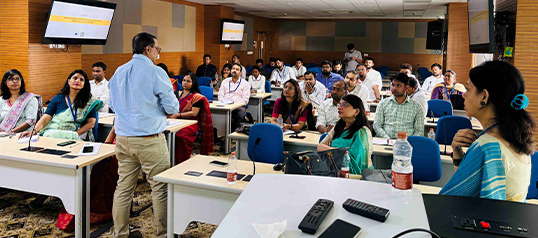
Training Programme for Newly Recruited Assistant Town Planning Supervisor Under Urban Development & Housing Department, Government of Bihar
About the Training Program
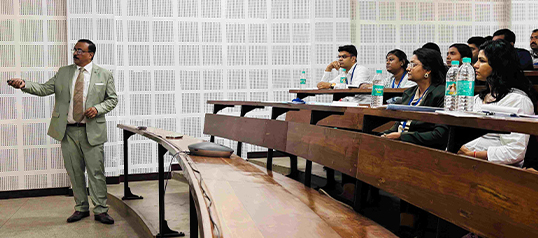
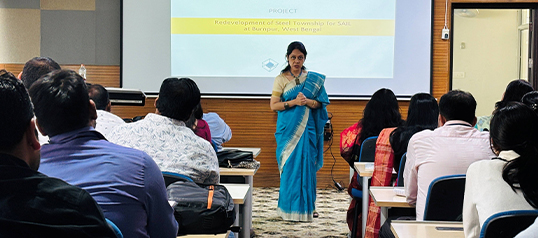
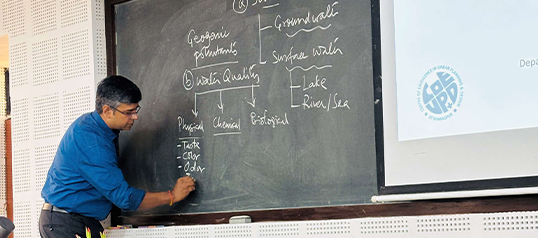
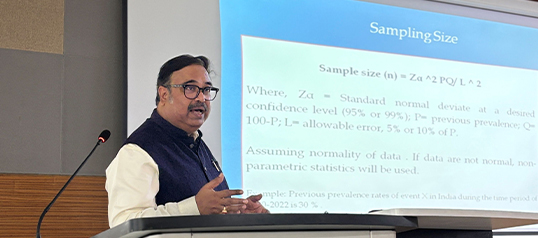
A comprehensive training programme on various aspects of Urban and Regional Planning for newly recruited Assistant Town Planning Supervisor under Urban Development & Housing Department, Government of Bihar. There will be a total of 8 to 9 modules broken into sub-modules. The training will be for 8 days within the window provided. There will be exhaustive hands-on exercise on GIS and application of GIS in the domain of urban planning. There is also a site visit component.
| Dates | Duration | Mode | No of Participants |
|---|---|---|---|
| 18th February, 2025 | 10 days | On-Campus | 37 |
Programme Structure
- Urban Planning and Spatial Planning – Planning Tools, Techniques & Practices + Land and Development
- Housing Economics + GIS
- Master Plan, Urban Retrofitting + Tourism
- Urban Services and Infrastructure Planning + Mobility
- Urban Design + Governance and Financing + AI in Urban Planning
- Climate Resilience and Disaster Mitigation + Master Plan
- Master Plan Guidelines and Policy + GIS
- Case Study
- Growth Management through Master Plan + Data Collection Techniques
- Climate Resilience and Disaster Mitigation
Who has attended?
- Government Officials
Course Outcomes
- Grasp the core principles of spatial planning, land development, housing economics, and urban retrofitting to support effective growth management.
- Gain hands-on exposure to Geographic Information Systems (GIS) and modern data collection techniques to assist in evidence-based urban planning and spatial analysis.
- Learn the essential concepts and best practices behind planning sustainable urban services, public infrastructure, and efficient mobility networks.
- Understand how disaster mitigation and Climate-resilient strategies are integrated into master plan guidelines and state-level urban policies.
- Become familiar with municipal financing mechanisms, governance frameworks, and the potential applications of emerging tools, such as AI, in the urban planning domain.
UPCOMING COURSES
Precinct Level Accessibility Audit using Spatial Audit Checklist and Simulation Based Techniques – in collaboration with SRM Institute of Technology, School of Architecture and Interior Design, Chennai
About the Course
| Dates | Duration | Mode |
|---|---|---|
| 20th – 21st August, 2026 | 30 Hours | On-Campus |
Venue: SRM Institute of Technology, School of Architecture and Interior Design, Chennai
Modules
Broad Areas to be covered:
- Introduction to Universal Design and Inclusive Cities
- Experimental Understanding of Universal Design
- Inclusive Pedestrian Areas and Public Zones
- Hands-on exercise on Universal Design Audit at precinct level
UPCOMING COURSES
Precinct Level Accessibility Audit using Spatial Audit Checklist and Simulation Based Techniques – in collaboration with Vellore Institute of Technology, School of Architecture, V-Sparc, Vellore
About the Course
| Dates | Duration | Mode |
|---|---|---|
| 20th – 21st Novembor, 2026 | 30 Hours | On-Campus |
Venue: Vellore Institute of Technology, School of Architecture, V-Sparc, Vellore
Modules
Broad Areas to be covered:
- Introduction to Universal Design and Inclusive Cities
- Experimental Understanding of Universal Design
- Inclusive Pedestrian Areas and Public Zones
- Hands-on exercise on Universal Design Audit at precinct level
UPCOMING COURSES
Precinct Level Accessibility Audit using Spatial Audit Checklist and Simulation Based Techniques – in collaboration with PSG Institute of Architecture and Planning, Coimbatore
About the Course
| Dates | Duration | Mode |
|---|---|---|
| 23rd – 24th Novembor, 2026 | 30 Hours | On-Campus |
Venue: PSG Institute of Architecture and Planning, Coimbatore
Modules
Broad Areas to be covered:
- Introduction to Universal Design and Inclusive Cities
- Experimental Understanding of Universal Design
- Inclusive Pedestrian Areas and Public Zones
- Hands-on exercise on Universal Design Audit at precinct level
UPCOMING COURSES
Urban Solid Waste Management and Circular Economy
About the Course
| Dates | Duration | Mode |
|---|---|---|
| 5th – 20th September, 2026 | 24 Hours | Hybrid |
Modules
- Introduction to Solid Waste Management (2 hours) Definition, scope & importance of SWM, Types of solid waste (municipal, industrial, biomedical, e- waste, C&D, hazardous, plastic), Street sweeping, Urbanization and waste generation trends, SWM in developing vs developed cities, Municipal Solid Waste Management Rules, CPHEEO manual
- The Waste Management Process - Part:1 (2 hours) Waste generation, Separation and storage at the source, Collection and transportation, Processing and transformation, and Disposal (Landfill siting criteria, types and management)
- The Waste Management Process - Part:2 (2 hours) Sources of waste, Waste classification, Waste quantity, Waste minimization, Physical and Chemical Waste characteristics, Data collection and sampling strategy, Waste forecasting, Waste storage, Seasonal and socio-economic impacts, Case studies
- Waste Processing and Treatment - Part:1 (2 hours) Concept of 3Rs, Recycling and recovery, Composting, Vermicomposting, E -waste management and recovery, Case studies
- Waste Processing and Treatment - Part:2 (2 hours) Waste to energy, Incineration, Pyrolysis, Gasification, Bio methanation, Refuse derived fuel, Evaluation of alternative technologies, Case studies
- Sustainable and Smart Waste Management (2 hours) Circular economy approach, zero waste cities, Smart waste management systems, IoT & data analytics in SWM, AI & automation in waste systems, Case studies
- Economics & Financing of SWM (2 hours) Cost analysis of SWM systems, Financial models, PPP models, User charges & revenue generation, Operation and maintenance, Financial implementation plan, Schedule for plan preparation, Carbon credits & climate finance, Service Level benchmarks
- Planning & Design of Integrated MSWM (2 hours) National Schemes and Policies, Global Laws, Municipal Solid Waste Management Rules, Institutional frameworks, Stakeholder participation, Role of ULBs, Waste management master plans, Infrastructure planning, Extended producer responsibility, Source segregation, Decentralized waste management, Integration of informal sector, Community participation and awareness
- Environmental & Health Impacts (2 hours) Public health risks, Environmental impacts, Life Cycle Assessment (LCA), Climate change & SWM, Occupational safety, Pollution and health perspectives, Greenhouse gas emission reduction, Environmental Impact assessment
- Best Practices and Introduction to Capstone Project (2 hours)
- Discussion on Capstone Project (2 hours) Doubt clearing session and discussion on the ongoing capstone project, pre-final submission of Capstone Project
- Evaluation (2 hours) Presentation of Capstone Project by the participants and discussion on next steps
UPCOMING COURSES
Transportation Planning and TOD
About the Course
| Dates | Duration | Mode |
|---|---|---|
| 23rd October - 1 st November, 2026 | 24 Hours | Online |
Modules
- Theory of Land Use and Transport Interaction (2 hrs.) Concept of land use, location theories and models, LUTI modelling techniques.
- Surveys and Choice Models (2 hrs.) Data collection techniques, location choice models, choice modelling, mobility and accessibility.
- - Land Price, Real Estate, Profitability and Policy (2hrs.) Land value theories, house price theories, land price model, developers’ model, hedonic regression, dynamic and premium FSI.
- Introduction to Transit-Oriented Development (2 hrs.) Evolution of TOD in India, Karkardooma TOD pilot, TOD principles, Rules and Regulations, National TOD Policy recommendations.
- TOD approaches (2hrs.) Scales of TOD, Development contexts, 3D/5D/7D concept, Node-Plance Mode, 3V approach, TOD implementation, Integrated approach.
- Land, Finance, and Policy in TOD (2hrs.) Benefits and effects of TOD, Land amalgamation approaches, Land Acquisition for metro rail and development, Financing for transit, Metro Rai Policy, Role of PPP in financing.
- Value Capture, Gentrification, and Station Area Planning (2hrs.) Land Value Capture measures and tools, Fare and non-fare box revenues, cost-benefit analysis, concept of gentrification, scenario analysis, Station Area Development and Planning norms.
- Rapid Assessment and Local Area Planning (LAP) (2hrs.) Steps for conducing rapid TOD assessment, Steps in LAP, steps for TOD plan preparation, case study on willingness towards TOD based redevelopment and LVC, case study on land price model and developers’ willingness.
- Case Studies – Global and National (2hrs.) Case studies of – Hong Kong, Tokyo, Delhi, Mumbai, Bangalore, Hyderabad, and Chennai.
- Case Studies and Introduction to Capstone Project (2hrs.) Case study of Transit Readiness Index, Introduction to Capstone Project, Sample structure and questionnaires discussion.
- Discussion on Capstone Project (2hrs.) Doubt clearing session and discussion on the ongoing capstone project, pre-final submission of Capstone Project
- Evaluation (2hrs.) Presentation of Capstone Project by the participants and discussion on next steps
UPCOMING COURSES
Applied Artificial Intelligence in Urban Planning and Governance
About the Course
| Dates | Duration | Mode |
|---|---|---|
| 7th - 22 nd November, 2026 | 24 Hours | Online |
Modules
- Artificial Intelligence and Urban Planning (2 hours) Basics of AI, Urban planning in digital era, need for AI in urban Planning, Smart cities, urban systems, data-driven governance, digital infrastructure, Case studies, Open data portals, Internet of Things
- Data for AI in Urban Systems (2 hours) Urban data sources, data processing and management (Types of data and data format, Types of databases and their need, APIs, web scraping, data cleaning, cloud storage), introduction to dashboards, exploratory data analysis
- GIS and AI (2 hours) GIS fundamentals, spatial data analysis using python, QGIS, ArcGIS with AI plugins, Handling spatial data for AI models, Case studies
- Machine Learning (6 hours) ML basics, Key algorithms (Linear & Logistic Regression, Decision Trees & Random Forest, K- Means Clustering, k-Nearest Neighbours, Support Vector Machines, hierarchical clustering, PCA, dimensionality reduction), model building, model training and testing, model evaluation (Accuracy, Precision, Recall, RMSE, Overfitting & Under- fitting)
- Neural Networks and Deep Learning (4 hours) Neural architectures, activation functions, backpropagation, CNN, time series modelling (LSTM), Natural Language Processing (NLP) for policy documents & citizen feedback, Computer Vision for urban monitoring, AI in digital twins of cities
- Fundamentals of Internet of Things (IoT) (2 hours) IoT architecture, protocols (MQTT/HTTP), sensors, actuator, Microcontrollers, Firmware, cloud integration, Case studies
- Integrated Urban Systems and Data platforms (2 hours) Geospatial analysis and dashboards, real-time analytics, PostGIS, Tableau, urban simulation, Google Earth Engine, Urban simulation platforms, Future of AI in Urban Planning (AI-driven cities, Digital twins & metaverse cities, Human-AI collaboration in planning, Emerging trends)
- Ethics, Governance & Policy (2 hours) Ethical issues in AI, Data privacy & surveillance, Algorithmic bias, Responsible AI in city governance, Legal frameworks & Urban AI policy
- Applications of AI in Urban Planning (2 hours) Transportation & Mobility, Land-Use & Zoning, Environment & Sustainability, Housing & Infrastructure and Disaster Management & Resilience, case studies
- Case Studies and Introduction to Capstone Project (2 hours) AI in Singapore smart city, AI-based traffic management in London, AI & urban climate adaptation, Indian smart cities using AI, Capstone project introduction
- Discussion on Capstone Project (2 hours) Doubt clearing session and discussion on the ongoing capstone project, pre-final submission of Capstone Project
- Evaluation (2 hours) Presentation of Capstone Project by the participants and discussion on next steps
UPCOMING COURSES
Urban Governance in Practice: Law, Institutions & Implementation
About the Course
| Dates | Duration | Mode |
|---|---|---|
| 7th - 16 th August, 2026 | 40 Hours | Hybrid |
Modules
-
Constitutional Framework of Urban Governance
Federal Structure of India – Centre, State and Urban Local Bodies
74th Constitutional Amendment and Schedule XII -
Institution
Types and Composition of Urban Bodies
Election and Function of Urban Local Bodies
Devolution of the Function to the Urban Local Bodies
Role confusion between ULBs, Development Authorities & Parastatals -
Finance
Municipal Finance and State Finance Commission
Taxation and Municipal Funds
Octroi
Loans and Borrowing
PPP basics
-
Public Participation
Citizen Participation in Governance
Smart Cities and Public Participation
Ward Committees
Elected Representatives and Bureaucracy
Conflict in urban projects
Stakeholder mapping
Dispute Resolution tools
Behavioral aspects of governance -
Urban Planning
Town and Urban Planning
City Development Authorities
Master Plans
-
Sustainability
Environmental Governanceg
Waste Management and Policy
Role of Urban Governance in Climate Change
Overview of Water, Sanitation, and Hygiene
Behavior changes in sanitation & waste -
Cities as Living Systems: Integrating Policy, People &
Planning
Systems thinking
Institutional coordination
Leadership
Conflict Management
Change management -
Cities as Living Systems: Integrating Policy, People &
Planning
Systems thinking
Institutional coordination
Leadership
Conflict Management
Change management
UPCOMING COURSES
Remote Sensing, GIS and Image Processing using FOSS for Urban Planning
About the Course
| Dates | Duration | Mode |
|---|---|---|
| 18th - 22 nd September, 2026 | 40 Hours | Hybrid |
Modules
- Optical Remote Sensing: Principles of Remote Sensing, surface, spatial data pre-processing
- Microwave remote sensing: Basics and advanced topics in Microwave remote sensing
- Geographic Information System: Tools and Techniques
- Digital Image Processing: Basics, Images features, Image filtering, classification, accuracy assessment, Machine learning in land use land cover analysis, change detection, Applications to resources inventorying, monitoring and management. Ground truth data. Digital image processing and image classification.
- Hands-on applications of Remote Sensing: urbanisation, design of Smart Cities, and resource management, Land use/landcover dynamics, Working on Free and open-source software: Google Co-Lab, Python, QGIS
UPCOMING COURSES
Urban Water Governance: Policy, People, and Practice
About the Course
| Dates | Duration | Mode |
|---|---|---|
| 02nd - 09 th November, 2026 | 16 Hours | Online |
Modules
- Why does governance collapse even when everyone knows it should not?
- Constitutional Mandates and Institutional Architecture
- Water Pricing, Tariff Reform and Cost Recovery
- Whose crisis is it, really?
- Climate Resilience and Integrated Urban Water Management
- Smart Water Management through AI ENABLED DIGITAL SYSTEM
- National Missions and Policy Frameworks
- Capstone Group Exercise — Water Governance Roadmap
UPCOMING COURSES
Climate Resilience through Heat Action Planning: Strategies for Mitigation and Management
About the Course
| Dates | Duration | Mode |
|---|---|---|
| 24th - 28 th August, 2026 | 15 Hours | In Person |
Modules
-
Introduction to climate change and need for resilience
Basics of climate change and global warming
Extreme heat events and rising trends
Concept of climate resilience and adaptation
Urban vulnerability in the Indian context
Linkages to sustainable development and urban planning
-
Policy overview of Urban environment, UHI and HAP
Urban environment and heat dynamics
Urban Heat Island (UHI): causes and impacts
Overview of Heat Action Plans (HAP)
National frameworks (NDMA guidelines, city-level HAPs like Ahmedabad)
Governance and institutional roles
-
Risk and Vulnerability assessment for city level heat
mitigation
Concepts: hazard, exposure, vulnerability, risk
Indicators for heat vulnerability (social, physical, environmental)
Data requirements for city-level assessment
Introduction to risk assessment frameworks
-
Hand-on training through tools and techniques for
assessment
Basic LST extraction (guided workflow/demo)
Mapping heat hotspots using sample raster data
Overlay analysis (land use vs heat)
Visualization and interpretation of outputs -
Experiment based assessment of thermal resilience of
buildings
Building heat gain mechanisms
Thermal comfort concepts (adaptive comfort, indoor vs outdoor)
Materials, envelope design, and passive cooling
Introduction to simple simulation tools (e.g., EnergyPlus) -
Deliberation on building and urban level solutions
Building-level solutions: cool roofs, insulation, ventilation
Urban-level strategies: green infrastructure, water bodies, urban design
Integration with Heat Action Plans
Nature-based solutions and policy linkages
Group exercise: Designing a heat-resilient neighbourhood
Proposal development (building + urban scale)
Presentation and peer review
Final synthesis discussion